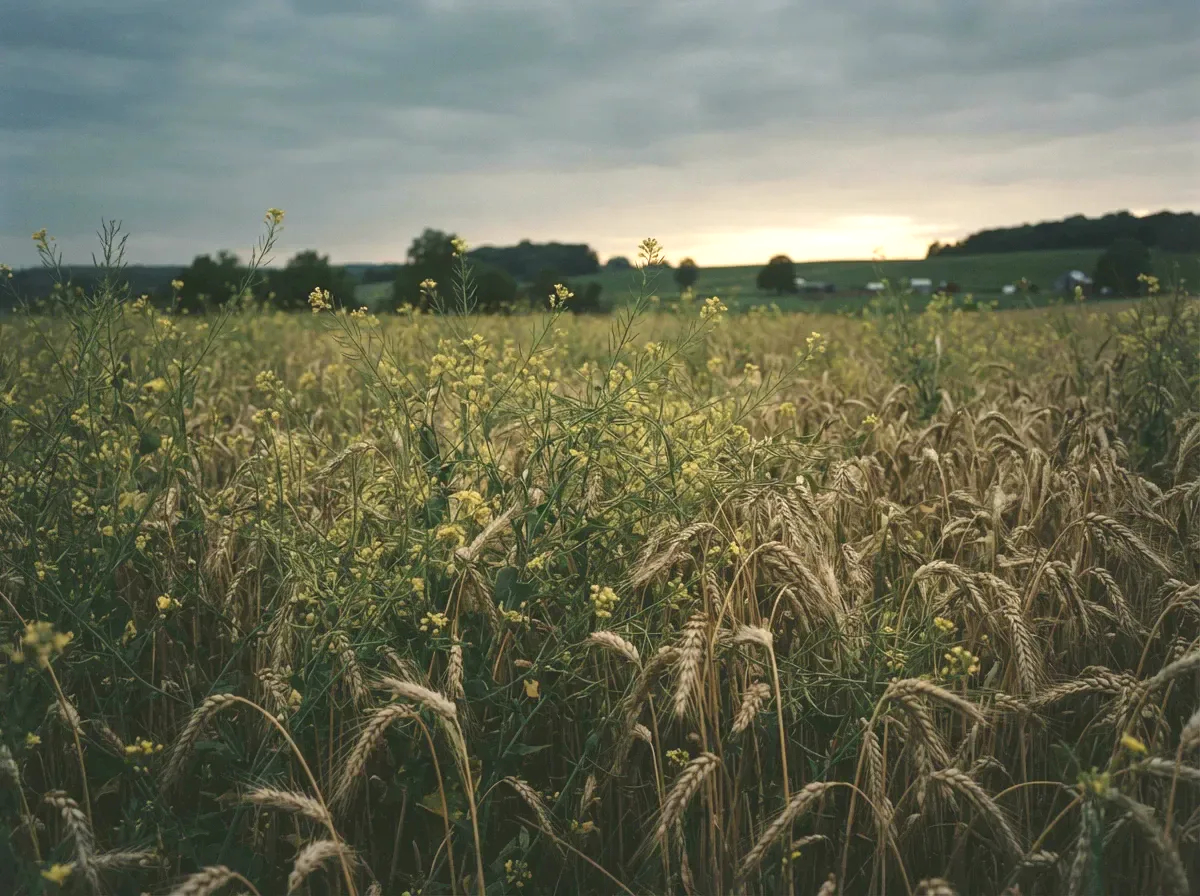
Why God Doesn't Remove the Weeds Now
“Do you want us to pull them up?”
— Mt 13:28
You May Not Know This About Jesus
Parables
"He who sows the good seed is the Son of Man.
The field is the world."
- Matthew 13:37
Jesus follows the Parable of the Sower
with a paired agricultural one-
a parable that shifts the focus
from the condition of the heart
to the condition of the world.
Here the question is:
What kind of world am I living in?
Jesus says the Kingdom grows
in a field where an enemy is active.
The good seed is sown by the Son of Man,
but while everyone sleeps,
the enemy sows weeds among the wheat.
(Mt 13:25)
The Greek word for "weeds" is zizania-
a plant that looks like wheat
until the heads form.
Only then can you tell the difference.
This is Jesus' point:
the Kingdom grows in a world
where the true and the false
grow side by side
and often look the same.
The servants ask the obvious question:
"Do you want us to pull them up?"
(Mt 13:28)
But the Master says no,
because uprooting the weeds
could damage the wheat.
Jesus explains the parable plainly:
The field is the world.
The good seed are the sons of the Kingdom.
The weeds are the sons of the evil one.
The enemy is the devil.
The harvest is the end of the age.
The reapers are the angels.
(Mt 13:38-39)
This is a parable about the world-
a world where God's people
and the enemy's people
grow together
until the day God separates them.
The wheat is not threatened
by the presence of weeds.
It is threatened
by the impatience of servants
who want to purify the field
before the time.
Jesus is teaching His disciples
to live with discernment
without judgment,
to live with clarity
without harshness,
to live with hope
without demanding God act
on their timetable.
The harvest will come.
The Son of Man will send His angels.
The weeds will be gathered and burned.
The righteous will shine like the sun
in the Kingdom of their Father.
(Mt 13:41-43)
But not yet.
Until then,
the Kingdom advances
not by uprooting weeds,
but by maturing the wheat.
You may not know this about Jesus:
the weeds are still here because
the Master is patient, not absent.
The presence of weeds
doesn't stop the wheat from growing.
It only reveals
how patient the Master is
and how certain the harvest will be.
Pass it on